Stay Calm and Eat Local: What the Cyclospora Outbreak Teaches Us About Food, Scale, and Community
You just want to feed your family food you can trust. That shouldn't be complicated, and it shouldn't require a chemistry degree, a recall alert app, or a news cycle to figure out whether dinner is safe.
But right now, if you've been following the news, you've seen it: a growing multi-state cyclosporiasis outbreak, with cases now reported in Maryland, and no one has been able to tell you where it came from. That's not a failure on your part for not knowing what to trust. It's a symptom of a food system that's grown so large, so consolidated, and so hard to trace that even the CDC is struggling to find the source.
It's tempting, in a moment like this, to reach for the safest-feeling option and just eat fewer fruits and vegetables until it blows over. But that's the wrong response, and not just because it's an overreaction. Fruits and vegetables are essential to your health and fear should never be the reason someone eats fewer of them. The real question isn't whether you should keep eating produce. It's where that produce is coming from.
We've heard from a number of you asking whether our produce is safe, and you deserve a straight answer, not just reassurance. So here's what's happening, why it keeps happening, and what you can actually do about it, starting with the choices you're already making every time you pick up a box from us.
What's Actually Happening
Most people have only been hearing about this in the last week or two, but it's actually been building since early summer. The 2026 cyclosporiasis season began May 1, and case counts stayed relatively low through mid-June — around 145 cases across 17 states. Since then, reporting out of Michigan pushed the total past 450, then over 1,000, then past 1,800 by early July, with cases now confirmed in 34+ states, including a small number here in Maryland. The story feels sudden because the case count grew fast, not because it appeared out of nowhere.
Health officials still haven't identified a source (though lettuce consumed at Taco Bell is under investigation). No recall has been issued for any product. We have no indication whatsoever that our produce is connected to this outbreak in any way.
It's About Scale.
It's tempting to say "buy local and you're safe because it didn't travel far." But that's not quite the real mechanism, and we want to be precise about it, because precision matters more than a good soundbite.
Cyclospora contamination almost always happens after harvest, in wash water, processing equipment, or handling, not in the field itself. The real risk isn't distance. It's scale. When produce is aggregated by the truckload from vast monoculture operations and funneled through massive centralized processing and washing facilities, a single point of contamination doesn't stay small. It gets blended into a batch large enough to reach tens of thousands of people across dozens of states before anyone even knows there's a problem.
Regional food systems break that chain. Smaller batch sizes mean fewer people share exposure to any single point of contamination. Local processing and wash water are easier to monitor, audit, and trace. And when something does go wrong, it's caught fast and contained small, not discovered weeks later after it's already reached half the country.
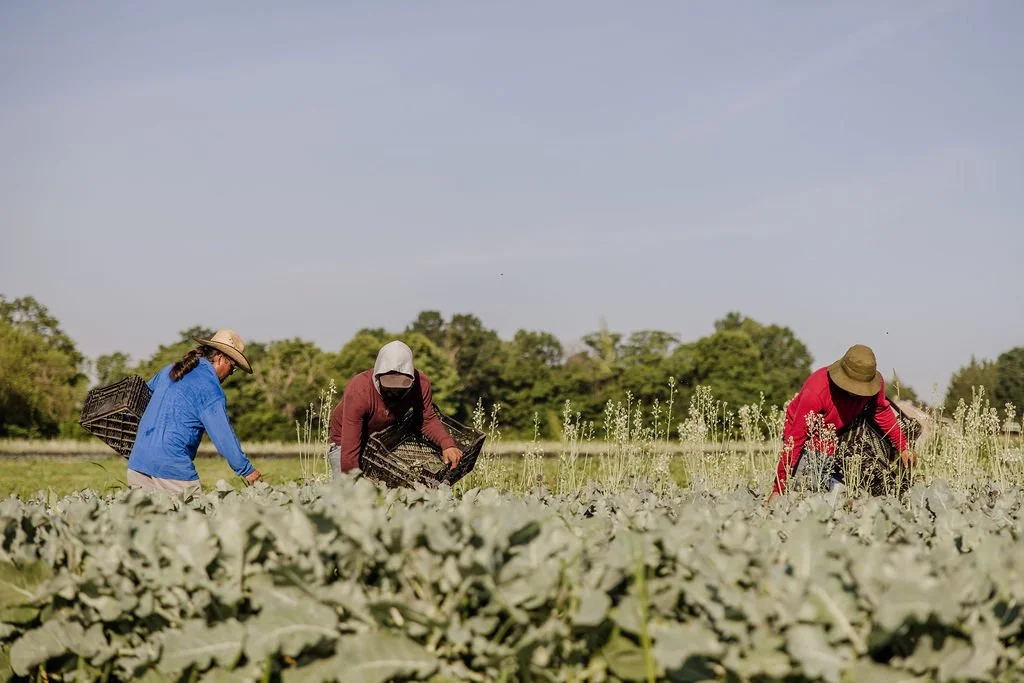
This is exactly why we harvest in small batches, why our entire team is trained in food safety protocols specific to our farm's official Food Safety Plan, and why we maintain GAP (Good Agricultural Practices) certification, meaning we're independently audited every year on water testing, sanitation, and traceability, the exact points where these outbreaks usually originate. Being small and local also means that if a concern ever did come up, we could trace and address it immediately, not weeks later, after product has already traveled across the country.
Why This One Is Taking So Long to Solve
There's another piece of this story worth understanding: investigators still don't know the source, and that's not just because cyclospora is hard to trace. It's also happening at a moment when the public health infrastructure built to catch these things fast has been dramatically cut back and stretched thin.
In 2025, the CDC made state reporting of cyclospora optional when it scaled back its Foodborne Diseases Active Surveillance Network, one of the core systems used to detect and respond to outbreaks like this one. The CDC has also faced broad workforce reductions, and a significant share of CDC funding flows directly to state and local health departments, where disruptions to those pass-through funds have further strained the public health infrastructure that underpins outbreak detection and response at the community level.
The practical effect: investigators have to interview people who got sick to figure out what they ate, but since symptoms can take anywhere from two days to two weeks or more to appear, people often can't remember everything they ate during that window, a challenge that's much harder to overcome quickly without full staffing and consistent reporting across states.
Weeks into a rapidly growing case count, the source still hasn't been found. That's exactly the gap that regional, traceable food systems are built to close. When your farm is down the road instead of across the country, you don't need a fully-staffed federal surveillance network to figure out where your food came from. You already know.
What You Can Do Right Now
Regardless of where your produce comes from, the CDC recommends:
Washing all fresh produce thoroughly, including herbs, before eating
Buying whole heads of lettuce rather than pre-washed bags when possible
Separating and washing herb leaves individually
Cooking produce to 158°F or higher when possible, which kills the parasite
Be the Change
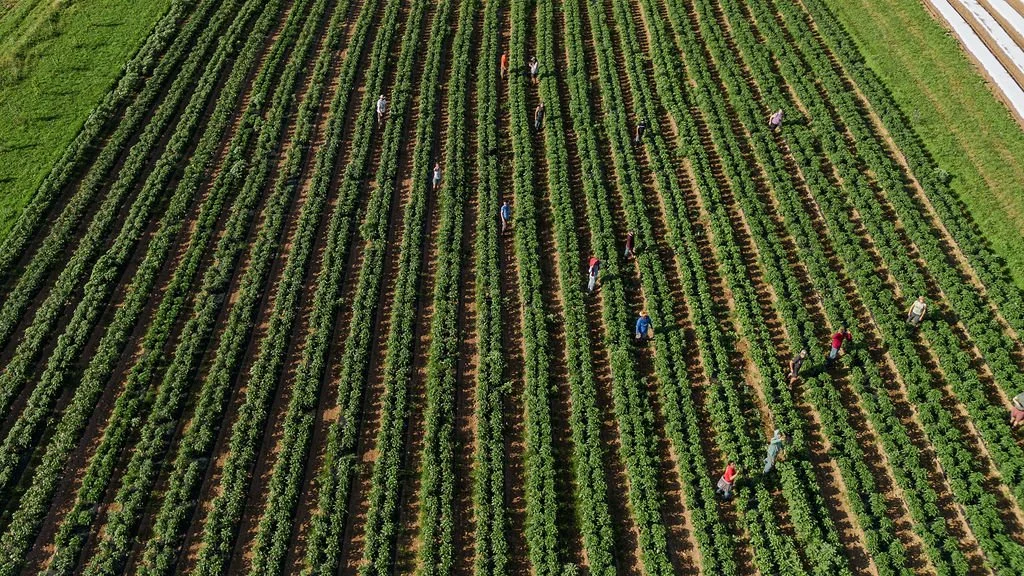
Here's the real choice in front of you, and it isn't the one this outbreak might make you feel like you're facing. It's not "eat vegetables and risk it" versus "play it safe and cut back." Fruits and vegetables are essential to your health, full stop, and fear should never be the reason someone eats fewer of them. The actual choice is where your produce comes from, not whether you eat it. Every time you choose food from a farm you can name, a farm small enough to trace a problem in hours instead of weeks, you're opting out of the exact system that made this outbreak so hard to solve in the first place, without giving up a single vegetable.
That's not a small thing. It's the whole thing.
When you buy from us, you're not just avoiding risk for your own table. You're putting your dollars behind small batches instead of massive aggregated ones, behind a team that's trained and GAP-certified instead of a supply chain too big to audit closely, and behind a food system where accountability has a name and a phone number instead of a call center. You're voting, every week, for a food system that's resilient by design instead of one that only holds together until the next thing goes wrong.
So here's what we'd ask of you: stay calm, not complacent. Wash your produce. Ask us (your farmers!) questions and expect real answers. Know that the safest food system isn't the one that can produce the most at once, it's the one where problems stay small because the farms do too.
We're continuing to monitor CDC and Maryland Department of Agriculture updates closely, and we'll share anything new that's relevant to our region or our operation. Thank you for choosing to put your family's food in the hands of people you actually know. That choice matters more than ever right now.
Eat local. Know your farmer. Strengthen your community.
— The Moon Valley Farm Team